

Mobile Trends and Travel Industry
Mobile Trends and Travel Industry
Mobile trends and Travel industry — numbers don’t lie
How much was the mobile Travel booking market worth in 2020? According to research from businesswire.com and marketsandresearch.biz, it was 1 067 300 000 USD — so the stake is high. Moreover, it is expected to grow with a CAGR (compound annual growth rate) of 12.2% from 2021 to 2029. The number of mobile users globally and the mobile travel booking market forecast clearly show that this area cannot be underestimated.
What else should be taken into consideration?
– Mobile channel generates around 70% of traffic;
– Mobile channel did not suffer during the pandemic — quite the opposite, it became the most popular channel;
– Mobile devices are not just for entertainment. They are the ‘individual command centers’;
– Applications allow users to make purchases almost instantly and in a contactless form — which is an important factor during pandemic times.
Travel applications and customer experience — a huge advantage for a travel company
This may sound obvious — vacation is about having a good time. The truth is that vacation starts with planning a trip, and this should also be an easy-to-do and enjoyable experience. This is where travel applications come in handy. Apps provide functionalities — for travel companies and customers — not available in desktop or ‘analog’ formats. What functionalities give the advantage?
– Fast access to data and content;
– Rich functionality — from booking flights to accommodation;
– Offline access to information;
– Push notifications to stay updated about the details.
Why fast access is so important? The bounce rate increases by 9% each second when the loading time of a website surpasses 2 seconds. Apps load faster, and this factor decreases the probability of losing customers. Rich functionality translates to an enjoyable experience and the possibility to guide customers through the meticulously designed customer journey — and as a result, finalize transactions (a win-win situation). Offline access to data helps customers access the desired information and leaves a positive impression — which is also important in marketing. Last but not least — push notifications to keep the customers in the loop and provide options for including CTA’s and additional information about other offers.
What about the numbers? Again — they speak for themselves. According to recent research conducted by Marketing Mobile Reads, travel applications download rose by 123% year-over-year! The number of downloads has exceeded 24 700 000 in 2021 — and the number is still increasing. That is a giant potential for the travel industry. What’s more — applications allow companies to gather data and re-adjust the features. It is priceless for monitoring the users’ preferences and implementing necessary solutions.
Benefits of mobile applications
All types of businesses can benefit from being present in the mobile technologies world. Despite the numbers, it is still not common in most industries. Thus, it can provide a huge advantage, as there are many possibilities to make a brand stand out and be competitive. What are the benefits of having a mobile app for travel companies? Here’s a list:
– Boost conversion rates;
– Increase revenue;
– Reaching the wide audience, as well as the specified target group;
– Target individual users;
– Develop brand loyalty;
– Become a top-of-mind brand;
– Reduce the stress of planning travel.
Mobile trends and travel industry — what is worth knowing
It’s best to keep an eye on mobile trends to stay competitive. We created a shortlist of the latest mobile trends that are very promising for the travel industry — see them below.
App as a virtual concierge — complex care is crucial knowing
Customers need to feel that they have been taken care of. And by that — they mean assistance before, during, and after the trip. On the other side — hospitality and tourism brands want to keep their customers engaged as much as possible. Therefore, establishing a connection is beneficial for both parties. This brings us to the topic that apps should be designed as virtual assistants, available for consumers 24 hours a day and 7 days a week. Moreover, the apps should guide the customers through the whole process — planning, enjoying, and returning from the vacation.
What exactly do we mean by that? A complex solution that allows the customers not only to book flights and hotels but also:
– Providing pre-flight statuses;
– Providing traffic updates;
– Offering airport mapping;
– Providing in-flight entertainment;
– Facilitating ground transportation bookings;
– Providing information about the destination activities.
The key is to establish a long-lasting connection by not limiting the app to just one or two services. Customers will return for more if they find the app and its provider as their favorite.
Mobile travel and AI — on-demand conversations with bots
Voice search is on the rise. According to firstsiteguide.com, 32% of people use voice search daily (instead of typing),72% of smart speaker users use them daily, and 30% of web browsing is screenless. What’s also interesting, Google voice search supports over 100 languages, and the accuracy rate in English is 95%(Google speech recognition). Another interesting fact –around 33% of travelers worldwide are using digital assistants to search for and book travel.
Why? Because technologies allow users to research and book flights, hotels, etc., on the go. And customers can use technologies hands-free — which they find very convenient. The capabilities of voice search and virtual assistants are still expanding.
Mobile travel — opportunity to deliver personalized offers
As in any other industry — personalized offers mean better service and higher conversion rates. This applies to the travel industry as well. For example, the preferences related to desired room standard or a flight class can help the brand deliver the product or service the customer wants. We have the numbers — according to Google research, 57% of travelers expect that travel companies will provide tailored-to-needs offers based on their previous experiences. That’s why travel brands should use the three crucial metrics in mobile solutions: location, time, and context.
Mobile payments — instant and contactless
Since mobile payments emerged in the market, customers’ behavior has changed. According to statista.com, the revenue from mobile payments in the previous (2020) year reached 1 370 000 000 000 USD globally. Paying on tap is easy and safe (both in terms of health and cybersecurity), and for travelers, this means that they can book a room, upgrade flight class, or buy duty-free goods in a blink of an eye. Minimum hassle actions are very convenient and are an advantage — apps in the travel industry can make a travel brand distinguish from others. Combine this with the option of last-minute bookings, and you get a massive group of satisfied and potentially loyal customers.
Mobile travel apps — the Itaka App
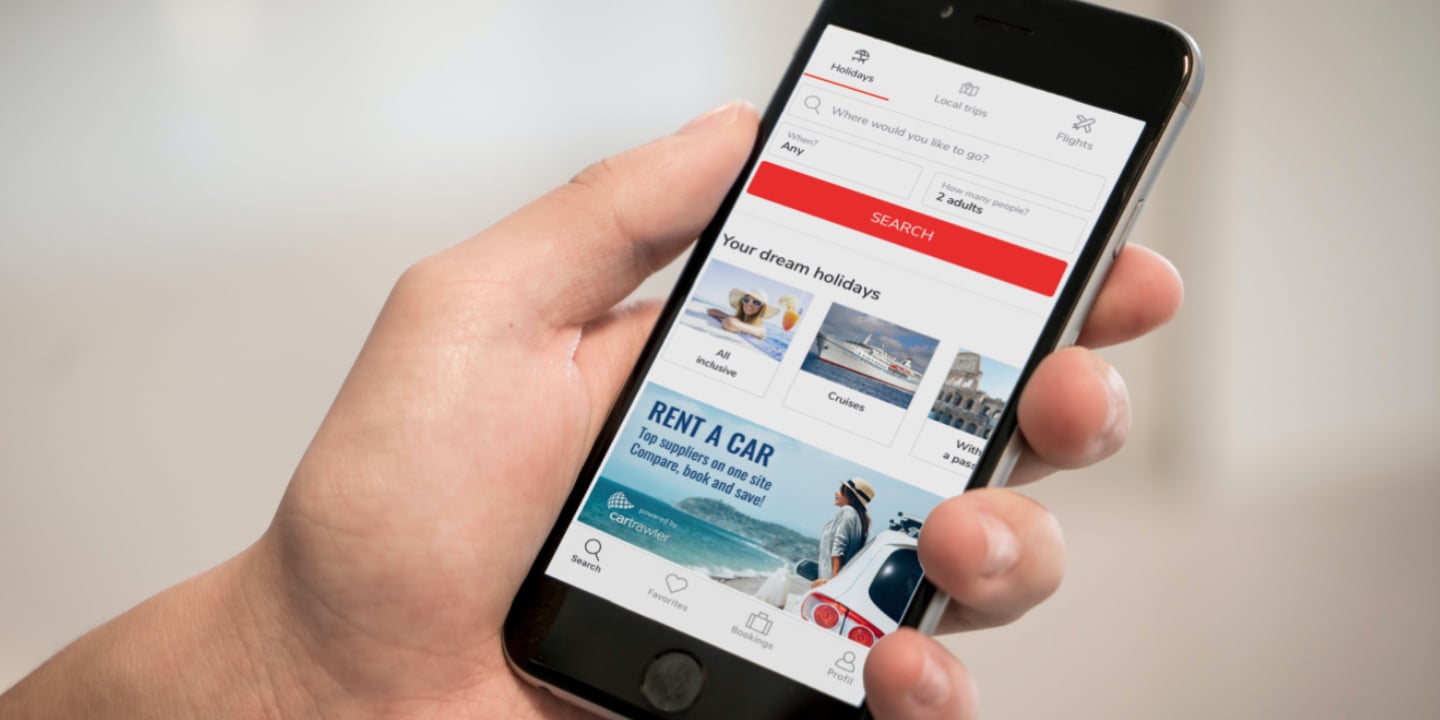
Not many companies are fully aware of the possibilities of delivering complex applications. One is our Itaka, which provides its customers with a complex mobile application.
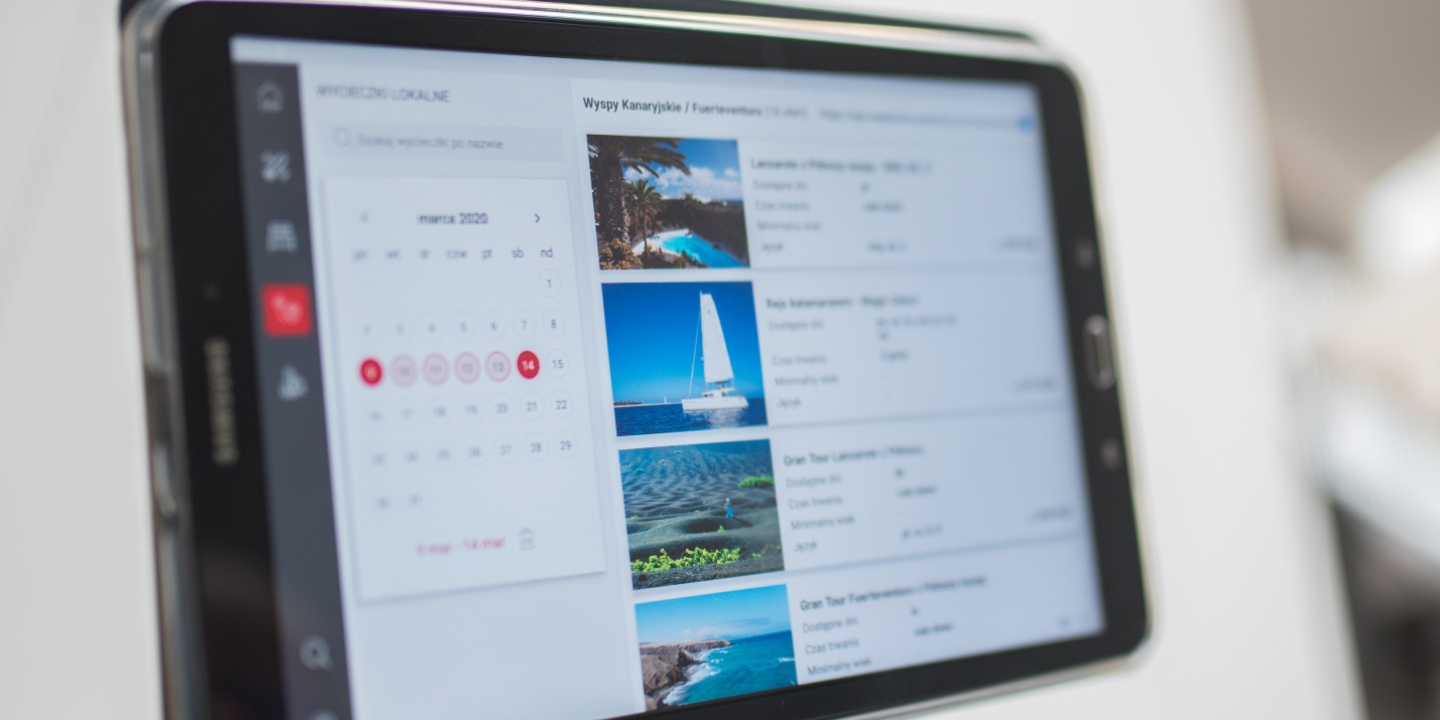
Itaka is the largest tour operator in Poland and one of the largest in Central and Eastern Europe, which knows that the best way is the towards-customers approach. Axabee provides all the solutions used by Itaka — including mobile applications. When creating our solutions, we study market trends and analyze how best to deliver the desired product. We have a long experience with the previously mentioned points in the article. And we can see that in numbers, our work is delivering the planned results — 45 000 users in 3 months decided to download the app, and now there are > 1 million downloads (iOS & Android), and constantly growing. In terms of trends and functionalities, the Itaka app provides:
– Customer service during the trip;
– Easy and accurate search;
– Few-taps booking option;
– Personalized offers;
– Helpful customer reviews;
– Integrations with external service providers (convenient);
– Contactless and instant payments;
– Direct contact option;
– GDPR-compliant data safety.
The Itaka app shows that the brand keeps an eye on mobile travel trends and brings an enhanced experience to customers. The Itaka app provides this before, during, and after the trips — there is no surprise it won Gold in the ‘Mobile Trends Awards.’ The future of mobile travel is at your fingertips, download the Itaka app and check our case study about this project.
More from Insights




Maximizing Business Impact with UX: How Service Safari Elevates Customer Experience at ITAKA Travel Agency


Data Management: How to Use Software to Organize and Analyze Your Business Data

Boosting Conversion Rates with Strapi Headless CMS: A Winning Combination

The Role of Project Management in Managing Remote Software Development Teams






Third-Party Cookies Are Soon to Be Gone. Instead, First-Party Cookies Are the Way to Earn Customers’ trust.


Workation in Thailand Seen “Through the Eyes” of Our UX/UI Designer – Angelika

Why is Flutter a High-Performance Framework for Application Development?

Android Jetpack Compose - Is Declarative Framework the Future of UI App Development?